Proper chicken house ventilation is one of the most important factors that determine the health, productivity, and welfare of chicken layer flocks. While many farmers focus on the overall ventilation system of the poultry house—such as exhaust fans, cooling pads, and air inlets—an often overlooked but equally important detail is the ventilation window inside the chicken cage itself.
As modern layer farms adopt high-density, multi-tier chicken cage systems, air distribution inside the cage becomes more complex. Poor internal airflow can result in harmful gas accumulation, heat stress, respiratory issues, low feed intake, and reduced egg production. Therefore, designing an efficient ventilation window for chicken cages is essential.
This article combines the practical experience and system features , providing a complete guide on how to design cage ventilation windows for commercial poultry houses.

Why do Chicken Cages Need Ventilation Windows?
In multi-layer chicken cage systems, cages are arranged closely, and airflow is often blocked by the chicken cage structure, feeding system, or manure belt. This leads to uneven airflow, especially in the mid and lower tiers.
A properly designed ventilation window can:
- Improve local air circulation
It allows fresh air to enter the interior of the cage, reducing stagnant zones.
- Reduce ammonia and humidity
Ammonia from manure and moisture from respiration must be expelled to avoid respiratory diseases.
- Maintain proper temperature and dryness
This helps prevent heat stress in summer and reduces wet litter or mold conditions in cold seasons.
- Enhance laying performance


Good air quality improves feed intake, immunity, and egg production stability.
Key Design Principles for Cage Ventilation Windows
Compatibility with the Overall Chicken House Ventilation System
The chicken house ventilation window should not function independently. It must work together with negative pressure exhaust fan system, cooling pad system, side-wall or ceiling air inlets and multi-tier layer cage structure.
Airflow should follow a clear path: air inlet → cage ventilation window → exhaust fan, ensuring uniform ventilation throughout the poultry house.
Scientific Positioning of Ventilation Windows
Depending on the chicken cage type (A-type or H-type), ventilation windows are usually positioned at:
Side panels – for horizontal airflow.
Front mesh – to increase forward air penetration.
Rear panels – to support negative-pressure driven airflow.
For high-density houses, multi-point ventilation windows are necessary to cover all cage levels.
Proper Window Opening Size
Oversized openings cause cold drafts and stress, overly small openings limit airflow.
Recommended guidelines:
- Round hole diameter: 10–30 mm.
- Hole spacing: 10–15 cm.
- Window width: 30–60 cm depending on cage length.
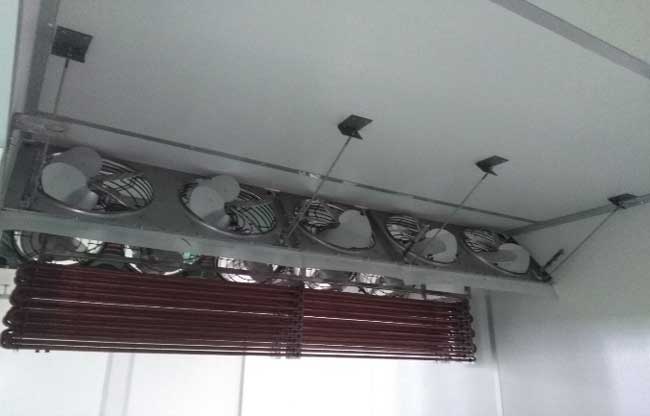
These should be adjusted based on the poultry house size and ventilation capacity.
Avoid Direct Draft on Birds
Direct airflow hitting birds can cause cold stress, especially in young layers or winter production.
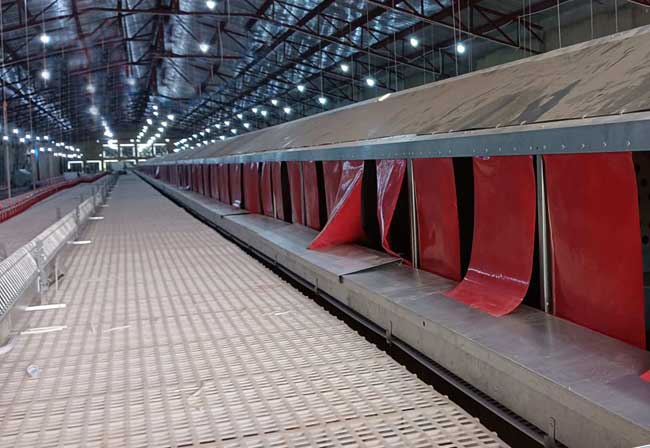
To prevent this, ventilation windows can use: Folded or zig-zag guiding plates, downward-sloped air deflectors, anti-draft mesh and secondary diffusion structures.
This ensures soft, evenly distributed airflow, a critical aspect of effective chicken house ventilation.
Use Durable and Corrosion-resistant Materials
Ventilation windows inside chicken cages should withstand ammonia, moisture, and long-term exposure.
Recommended materials include: hot-dip galvanized steel, PVC panels, PE/PP sheets and reinforced galvanized mesh.
This aligns with the long-lifespan chicken cage materials emphasized on A type chicken cage.
Integration with Automated Environmental Control Systems
Modern poultry houses rely on automated systems for precise chicken house ventilation. Cage ventilation windows should work in coordination with these technologies.
Automatic Air Volume Adjustment
Sensors measure:
- Temperature.
- Humidity.
- Ammonia levels.
- CO₂ levels.
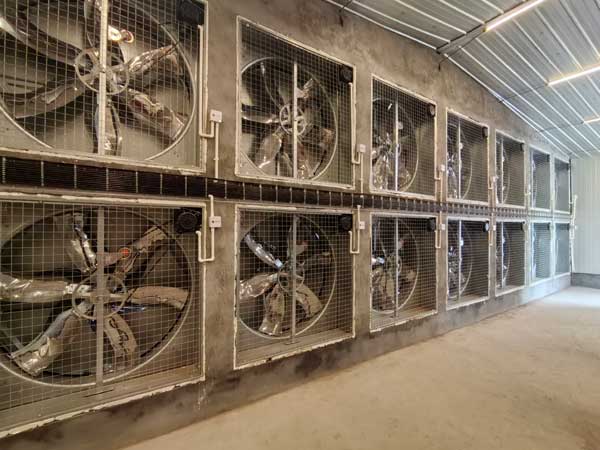
The controller adjusts fans and inlets accordingly, ensuring stable airflow through the cage windows.
Synergy with the Manure Removal System
The manure belt system featured on AGICO helps reduce ammonia concentration. Combined with internal ventilation windows, it significantly improves house air quality.
Compatibility with Auto Feeding and Drinking Lines
A clean and simple installation layout avoids blocking the airflow path of the ventilation windows.
Seasonal Application Strategies
Summer Ventilation
Fully open ventilation windows.
Combine with cooling pads.
Increase fan speed to reduce heat stress.
Winter Minimum Ventilation
Keep ventilation windows partially open.
Maintain minimum airflow rate.
Avoid excess moisture and cold drafts.
H-Type Layer Cage Ventilation Window Design
Based on the popular H-type cage system on AGICO, a typical design includes:
- Long-strip ventilation windows (40–50 cm) on both cage sides.
- Uniform air holes on rear panels to help air infiltration through negative pressure.
- Vertical airflow channel created between top and bottom tiers.
- Optimal air velocity: 1.5–2.5 m/s for layer comfort.
This design ensures fresh air reaches every tier of the multi-layer system.
Although small in size, ventilation windows inside chicken cages have a significant influence on: poultry health, egg production performance, air quality, environmental uniformity and equipment longevity.
With high-density cage systems becoming the norm, internal cage ventilation design is now a critical part of modern poultry house engineering.
For more professional guidance on cage layout, chicken house ventilation, and automated layer cage systems, visit www.chickenlayercage.com to access complete turnkey solutions.