In recent years, the global poultry farming industry has been undergoing a profound transformation, especially in the way laying hens are raised. As global consumers continue to pay more attention to food safety, animal welfare, and sustainable production, the traditional battery cage system is gradually being replaced by more humane and better-functioning enriched cage systems also known as enriched colony cages, including forms such as enriched cages for laying hens and enriched colony cage.
The dual driving forces of the global market and regulations are the key factors enabling the rapid adoption of enriched cages for laying hens and enriched colony cage. In Europe, the EU completely banned the use of traditional battery cages as early as 2012, requiring all laying hens to be housed in welfare-compliant enriched cages. In North America, especially in Canada and some U.S. states, laws have been introduced to phase out conventional caging equipment and encourage the use of enriched cage systems. Canada has developed a phased transition plan to encourage producers to adopt enriched cages or move toward cage-free farming. In Asia, some export-oriented egg producers have also begun investing in enriched colony cage facilities to meet the high-welfare certification requirements of the international market.

In terms of market demand, supermarkets, food processors, and restaurant chains are increasingly inclined to purchase eggs from high-welfare production systems. For example, some international supermarkets have announced that starting in 2025 they will only sell cage-free or enriched system eggs. This has not only increased awareness of enriched cage systems in the market but also created significant growth potential for them.
Industry experts point out that this transformation is not just a response to regulations but a comprehensive improvement in farming efficiency, flock health, and brand competitiveness. In the future, as the concepts of healthy eating and sustainable development become more popular, enriched cages for laying hens and enriched colony cage are expected to become the new global standard for laying hen farming, especially in market environments that seek to balance stable production with animal welfare.
What is an Enriched Cage System

The enriched farming model is a popular form of poultry housing in Europe and the U.S. The enriched cage system, also known as enriched cages for layer hens or enriched colony cages, is developed based on traditional chicken cages. Research shows that enriched farming can improve the laying performance of hens, with laying rates reaching 95%.
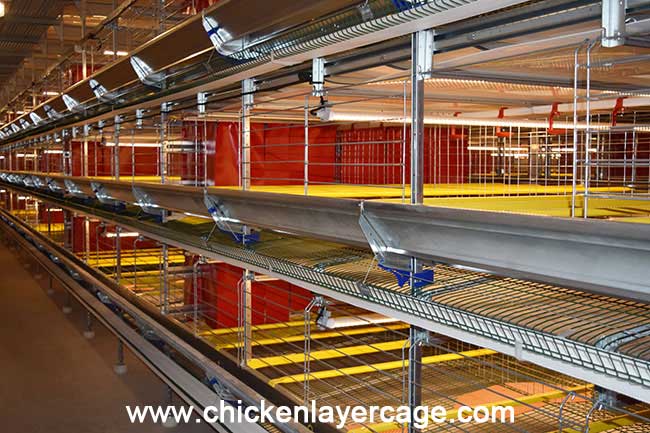
Conventional laying hen cages provide drinkers, feed troughs, egg collection belts, and manure removal belts. Enriched cages retain the high-density and easy-management advantages of conventional cages while offering more space, perches, nesting boxes, and scratching areas, allowing hens to express more natural behaviors while maintaining high production efficiency. Compared with traditional chicken layer cages, such systems significantly improve the farming environment while maintaining egg production and cost-effectiveness.
In enriched cages, each hen can have about 18,750 cm² of space, including about 15,000 cm² of floor area and 3,000 cm² of nest area, along with a 375 cm perch and a 300 cm feed trough. In contrast, conventional battery cages usually provide about 300–10,000 cm² of space per bird.
Comparisons between Enriched Cage Systems and Traditional Battery Cages
| Comparison Dimension | Conventional Cage System | Enriched Cage System / Enhanced Colony Cages |
|---|---|---|
| Space Availability | Limited movement space for birds | Provides more vertical space and activity areas |
| Animal Welfare | Restricted behavior, high stress | Allows natural behaviors, low stress levels |
| Level of Automation | Partially automated | Highly automated, improving management efficiency |
| Production Efficiency | High output but unstable egg quality | High output with stable egg quality |
| Regulatory Compliance | Facing phase-out in some regions | Meets international animal welfare regulations and trends |


Main Components and Design Features of Enriched Cage Systems
With the poultry industry moving toward higher welfare, enriched cage technology is continuously improving to meet the higher efficiency, durability, and automation demands of farms. Modern enriched cages for laying hens and enriched colony cage have more scientific designs and introduce automation and environmental technologies.
- Materials: High-strength galvanized steel wire or hot-dip galvanized plates for corrosion resistance, lasting over 15 years. Modular design for easy installation, expansion, and modification.
- Functional features: Complete perches, nesting boxes, scratching areas, and independent lighting and ventilation systems for balanced light and fresh air.
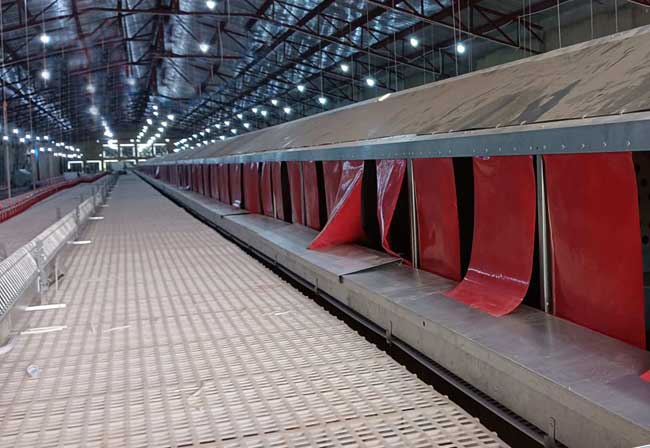
- Automation: Automatic feeding, drinking, egg collection, manure removal, and environmental monitoring systems.
These upgrades improve welfare, reduce labor costs, and enhance overall farm efficiency, making investment in enriched cages both a compliance requirement and a competitive advantage.
Agico Enriched Cages For Laying Hens Case
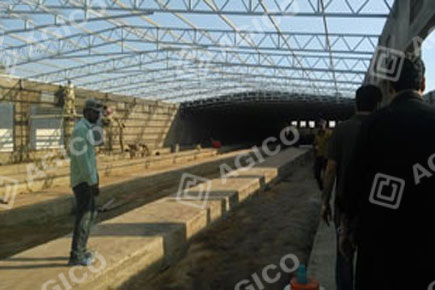
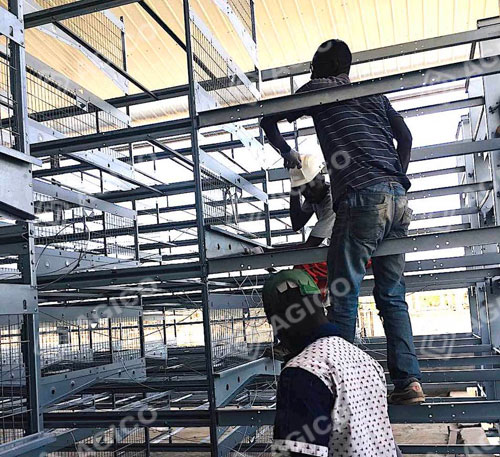
Recently, we completed a fully automated enriched colony cage system for a large egg farm in Shandong, China, producing 20 million eggs annually. This multi-tier system includes perches, nesting boxes, and scratching areas, along with full automation in feeding, egg collection, manure removal, and climate control.
Results: +5% laying rate, -40% egg breakage, compliance with welfare standards, and a long-term supply contract with European buyers at a 15% price premium.
Advantages of Enriched Cage Systems
Improve Animal Welfare: Meets international animal welfare standards, helping to access premium markets.
Enhance Egg Quality: Lower breakage rate, stronger eggshells, and better yolk color and taste.
Extend Peak Laying Period: Reduced stress and disease lead to a longer laying cycle for hens.
Facilitate Automated Management: Can be seamlessly integrated with automatic egg collection, manure removal, and feeding systems.
Environmentally Sustainable: More efficient manure handling and ventilation systems reduce environmental pollution.
The enriched cage systems incur higher costs compared to conventional battery cages, but these can be recovered through long-term productivity gains and market premiums. Additionally, implementing enriched cage systems requires poultry workers to undergo training on the new systems, including mastering techniques for feeding, equipment maintenance, and disease prevention. The design and installation must also comply with animal welfare regulations in the respective country or region.
However, with global focus on welfare and sustainability, enriched cages for laying hens and enriched colony cage are becoming core equipment for modern egg farms. This trend is spreading beyond developed countries into emerging markets, offering higher production, better quality, and premium market access.
If you are considering upgrading your facilities or building a welfare-compliant modern egg farm, we provide one-stop solutions from design to after-sales service. Contact us to take your farm toward efficiency, sustainability, and higher profitability.